Crowned in Our Glory: The Politics of Black Hair
Hair has never been “just hair” in Black communities. It is history, artistry, spirituality, and identity woven strand by strand. Crown-inspired natural hairstyles – including the Afro, braids and cornrows, and Bantu knots – are not simply aesthetic choices. They are wearable expressions of cultural resistance, dignity, and self-definition.
Long before colonization and enslavement, intricate hair-styling traditions flourished across the African continent. In many societies, hair communicated age, marital status, lineage, religion, and social rank. Braiding patterns were deliberate and symbolic. Knotted and sculpted styles carried spiritual meaning. Hair was not separate from identity – it was identity.
The violence of the transatlantic slave trade disrupted these traditions. Enslaved Africans often had their heads shaved upon capture, stripping them of cultural markers and attempting to erase individuality. Under slavery and later segregation, Eurocentric beauty standards were imposed as measures of worth. Straightened hair became associated with professionalism and social mobility. Natural textures were deemed “unkempt” or “unacceptable.”
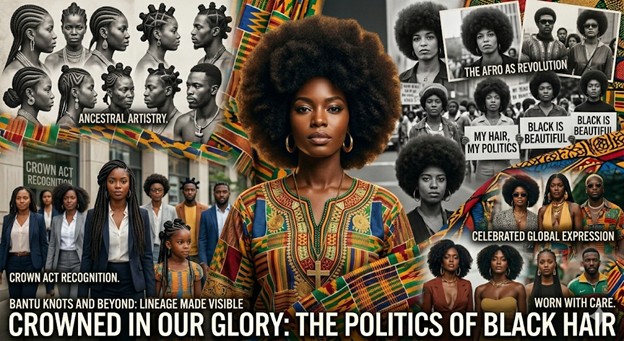
Against this backdrop, the natural hair movement of the 1960s and 70s became revolutionary. The Afro rose to prominence during the Civil Rights and Black Power eras as a bold rejection of assimilation. Worn rounded and unapologetically voluminous, the Afro celebrated texture rather than concealing it. Public figures like Angela Davis made the style iconic, though she often reminded audiences that her politics were deeper than her hair. Still, the visual power of the Afro was undeniable. It declared that Black features did not need alteration to be beautiful or worthy.
Braids and cornrows tell an even older story. Cornrows date back thousands of years in Africa. Patterns varied by region and could signal tribal belonging or social status. During slavery in the Americas, oral histories suggest that cornrow patterns were sometimes used to map escape routes or conceal seeds for survival – blending beauty with resistance. In the late 20th century, braids re-emerged in mainstream visibility through athletes, musicians, and everyday cultural expression. Despite facing workplace and school discrimination, Black communities continued to wear them, challenging institutions that labelled them “unprofessional.”
Similarly, Bantu knots trace their roots to Southern Africa. The style involves sectioning hair into small coils twisted into tight knots close to the scalp. Both sculptural and practical, Bantu knots protect natural hair while making a striking visual statement. In recent decades, the style has been reclaimed globally as part of a broader return to natural hair practices. When worn today, Bantu knots are often styled with intention — connecting modern fashion to ancestral heritage.
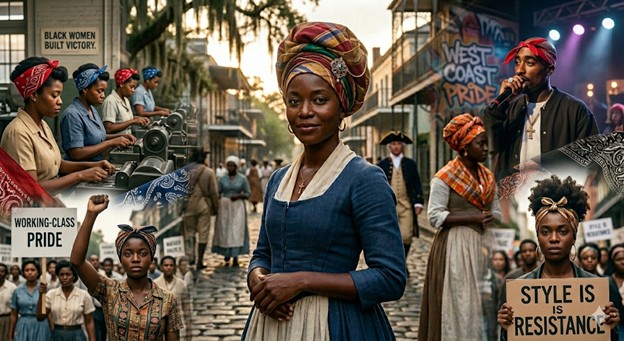
What unites these styles is their evolution from marginalized expressions to celebrate symbols of pride. For generations, Black people were told their natural hair was too political, too distracting, too different. Yet each twist, coil, and braid carries resilience. Choosing to wear natural hair can still be an act of quiet defiance in spaces that privilege conformity.
In recent years, legal protections such as the CROWN Act in various U.S. states have acknowledged hair discrimination as a civil rights issue. This recognition underscores what Black communities have always known: hair is tied to identity, and policing it is a form of cultural control.
Crown-inspired hairstyles endure because they are more than trends. They are lineage made visible. They honour ancestors while affirming self-acceptance in the present. Worn high, braided close, or knotted with care, these styles remind the world that Black hair – in all its textures and forms – is not something to tame, but something to crown.
Celebrating the Crown Through Culture
Crown-inspired hairstyles are more than beauty statements – they are symbols of heritage, pride, and resilience. The same spirit that lives in the Afro, braids, cornrows, and Bantu knots also lives in the art, textiles, and cultural expressions created across the African continent.
My African Gift Shop carries forward the heritage by offering African-inspired clothing, accessories, and cultural pieces that honour the richness of African traditions. From Ankara headwraps that beautifully frame natural hairstyles to handcrafted jewelry and cultural décor, these items allow people to express pride in their roots beyond hair alone.
Just as natural hairstyles reclaim identity and history, African cultural products reconnect people to the stories, artistry, and traditions that have endured for generations. Wearing a bold Afro with a vibrant headwrap, styling braids with traditional beads, or pairing Bantu knots with African-inspired accessories transforms everyday style into a celebration of culture.
Because the crown is not just on the head – it is in the heritage we carry and the traditions we choose to honour.
Explore the collection at My African Gift Shop www.myafricangiftshop.com and continue celebrating the beauty, culture, and history that make the crown shine.