
The Ethical Cut: How Zero-Waste Design is Revolutionizing African Fashion
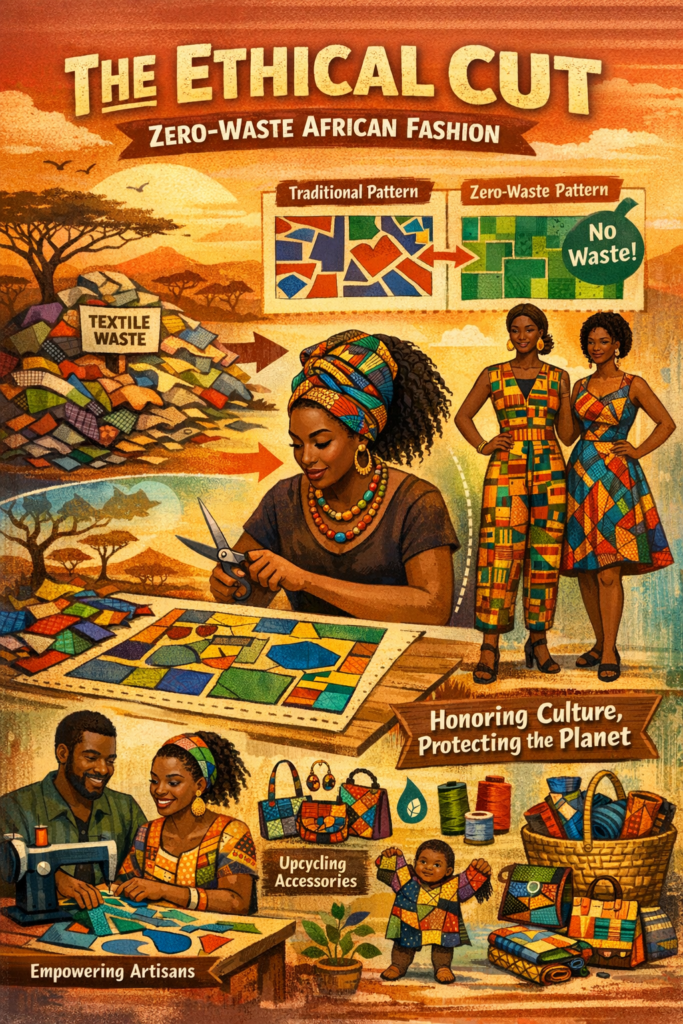
In the world of fast fashion, where mountains of textile scraps pile up in landfills, the concept of waste is often accepted as a grim inevitability. But within the vibrant, resourceful landscape of African fashion—a tradition already rich with meaning and sustainability—a powerful movement is redefining this narrative: Zero-Waste Design.
For brands, artisans, and ethical consumers, zero-waste isn’t just a trend; it’s a revolutionary way of thinking that maximizes every inch of beautiful fabric, minimizes environmental impact, and honors the cultural value of the textile itself.
The Problem with the Pattern
To understand the genius of zero-waste, we must first look at conventional garment production. Globally, traditional pattern-cutting often results in 15% to 20% of fabric being discarded as waste before the garment is even sewn. While 15% may sound small, when scaled across a global industry that produces billions of garments annually, this amounts to millions of tons of high-quality, often synthetic, material destined for landfill.
In Africa, where resources are highly valued, and the concept of wastefulness runs contrary to cultural norms, this figure represents not just an environmental cost, but a financial and ethical one. Artisans and small businesses operate with an inherent understanding of resource scarcity, making the move to zero-waste feel less like a new concept and more like a return to deeply rooted principles of efficiency.
Zero-Waste Design: The Maximization Principle
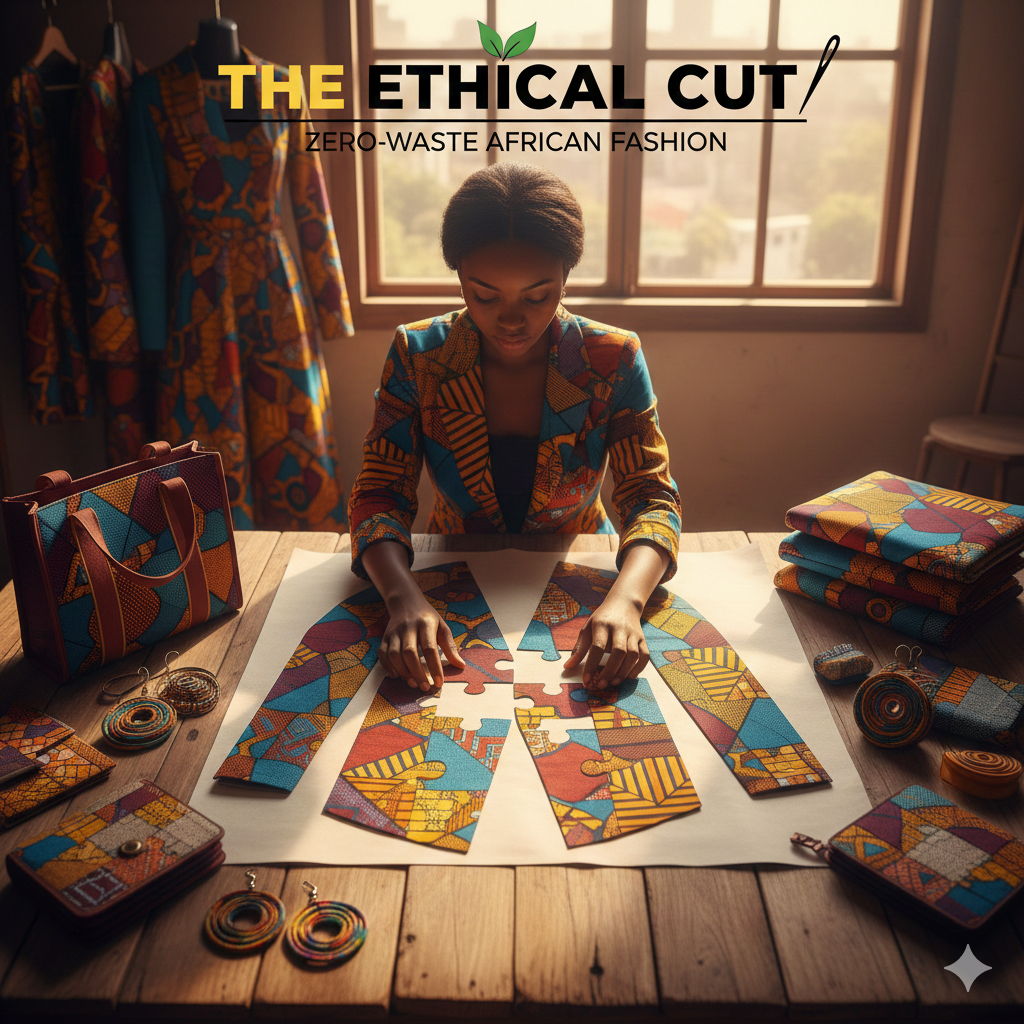
Zero-waste design is a system where the pattern pieces, when laid out on the cloth, leave virtually no remnant scraps after cutting. This is achieved through highly creative and complex pattern construction, often resembling a puzzle.
Instead of curves and angles that leave gaps, zero-waste garments use straight lines, interlocking shapes, and clever negative-space manipulation. This approach offers several profound benefits:
1. Environmental Stewardship
The most obvious impact is the reduction of landfill volume. By eliminating up to 20% of fabric waste, designers directly contribute to minimizing textile pollution, which is particularly crucial when dealing with non-organic or dyed materials that leach toxins into the ground. Furthermore, it conserves the energy and water used in the initial production of the discarded fabric.
2. Respecting Cultural Value
African textiles, such as Ghanaian Kente, Nigerian Ankara, and Malian Bogolanfini (Mudcloth), are not merely material; they are storytellers. They carry cultural history, spiritual meaning, and personal identity encoded in their colours, symbols, and patterns. To waste 20% of such a fabric is to disrespect the artistry, the history, and the communal labour involved in its creation. Zero-waste design ensures that the entire narrative held within the textile is utilized and honoured.
3. Economic Empowerment for Artisans
For small-scale artisan cooperatives, particularly those featured on platforms like www.myafricangiftshop.com, minimizing waste is critical for profitability and sustainability. When a designer can get 5 garments out of the same yardage that previously yielded only 4, it directly increases the revenue stream for the artisan, supporting fair wages and bolstering local economic resilience. It turns a potential expense (waste disposal) into a realized asset.
More Than Cutting: Holistic Waste Management
The African approach to zero-waste often extends beyond the initial pattern cut, encompassing a holistic view of the garment’s life cycle. This includes:
- Upcycling and Repurposing: In the rare case that a true scrap piece remains, these fragments are not thrown away. They are skillfully transformed by artisans into complementary products. Tiny strips of Ankara might become vibrant piping on a tote bag, while small squares are pieced together for patchwork accessories, wallets, or jewellery. This creativity ensures that the circle of resource use is closed.
- Durability and Versatility: Sustainable design also means creating clothes that last longer. African-inspired designs often prioritize durability, both in fabric choice and construction. Brands also encourage versatility- creating transformable garments that can be styled for multiple occasions, encouraging consumers to buy less and wear more.

Conclusion: Weaving a Better Future
Zero-waste design in African fashion is a powerful blend of modern ethical necessity and traditional African resourcefulness. It is a movement that respects the earth, empowers the artisan, and ensures the beautiful narratives woven into every textile are fully told.
For the conscious consumer, supporting zero-waste African fashion means investing in more than just a beautiful product; it means contributing to a revolutionary, ethical supply chain where every cut, stitch, and scrap is accounted for, proving that the most sustainable style is the one that leaves nothing behind.

A really good blog and me back again.